
Dear follower
You may or may not have noticed that our blog has moved.
Instead of having separate website, webshop and blog we've now collected all three into one place. Clever eh? So from now on please follow us here: http://coffeecollective.dk/blog/
If you're reading this in an RSS reader please make sure to update your feed.
All old posts are also moved to the new site, so don't worry - there's plenty to read.
See you on our new site!
Monday, June 2, 2014
Our blog has moved !

Saturday, March 1, 2014
Jægersborggade closed 5 days for renovation
It´s time to give our shop in Jægersborggade a face-lift. We will do some improvements in the bar, but also some changes in seating and in general just make it more pleasant and easy to be a guest in our house.
So we will be closed from Monday 3rd March until Friday 7th March.
We open again as usual on Saturday 8th March at 8.00
See you there !
Tuesday, February 18, 2014
Yukro 2014
This November I was fortunate enough, once again, to travel to the Yukro Cooperative located near Agaaroo in the Jimma area of Ethiopia. This will be the third time we buy coffee from Yukro. Yukro started out with help from the TechnoServe organisation who secured a loan to finance equipment for producing high quality washed coffee. They are now operating completely independent, although the agronomists from Technoserve still pay them a visit once in a while to see if everything is on the right track.
Upon arriving, the first person I met was the new Chairman Lezu Alfitha, who had just taken over from Tadase as chairman. He was super friendly and helped out building a small shelter for my campsite. After I was all set up, Lezu gave me a bit of a tour and pointed out what they had been doing to meet the demands for organic certification. The Organic Auditor would be coming by the week after my visit to see if everything was in order. Around the Yukro village all coffee is grown without any kind of unnatural additives. The coffee is still growing wild in the nearby forests and it is believed by some that areas such as these in Ethiopia are where coffee originated. We know from our previous visits that they don’t use any pesticides, fungizides or artificial fertilizers. So they are by default growing their coffee organic, but just havn’t been certified yet . We deceided to offer the cooperative that we paid for them to get certified as we have customers who only sell certified organic food and drinks. Hopefully this will increase the total income for the Cooperatives coffees in general.
I arrived at Yukro the day before the first coffee cherries was due to arrive at the mill, with the final preparations for the upcoming 2013-2014 harvest close to completion. The last drying tables were being set up, the nets covering them were checked for holes and straightened out, the demucilator was getting cleaned and tested and the washing tanks scrubbed. It was a very exciting time and you can see and feel that the workers and farmers were very anxious to get started.
I had decided to spend the night at the wet mill in my tent to be able to attend the processing of the very first lot of coffee from Yukro this year. Quite late at night, when it is still pitch black, the berries which has been selectively handpicked during the day are received at the washing station, were the under and over-ripe cherries are removed by hand, under flashlight, before the cherries continue down to the demucilator. As this was the first time this year that the machine was running, there were plenty of extra people on hand. Everybody, myself included, was very excited to see this year’s harvest get under way. When the cherries reach the demucilator, the pulp is removed mechanically, leaving the fresh coffee beans, which slowly begin to fill the washing tanks. Now the coffee will soak under water until the next morning, when they will be put out onto the raised drying tables. For the first couple of hours the coffee is dried on shaded raised beds and hereafter moved to tables under direct sun. Here they are turned and hand-sorted for various defects that the previous day’s mechanical process may have missed.
Tonight's work ends around the campfire with a nice dinner of freshly slaughtered goat, prepared with a lot of onion and oil. They are incredibly hospitable at Yukro and I got offered to take part in the holy prayer with hope for a great harvest.
Last year there was a drought at the end of the berries’ ripening period. This resulted in many berries drying on the plants before they had fully matured, meaning they were wasted or of rather poor quality. This resulted in a very small harvest. Yukro only exported only 24774 kg of coffee last year compared to 57487 kg the year before.
When the harvest is as small as last year, the sorting process suffers. This is something we noticed in the coffee from Yukro last year, with the cup profile not being as clean as it had been the year before. One must keep in mind that the yearly income from the coffee harvest is the main income for these farmers, so when harvest is low they will try to push volume. This resulted in the somewhat more unclean coffee than we saw from last year’s crop. We know the quality they are capable of producing at Yukro can be higher than that. Lower quality because of bad weather is not their fault and therefore we also feel it is our duty to keep supporting them even when the harvest is very tough. This year the harvest looks to be really good, with a lot of berries on the plants and everything looking fresh and healthy.
For many years we have dreamt of, once again, being able to get a natural processed coffee from Ethiopia of high enough quality to use in our espresso blend. Last year we talked to the guys at Yukro about preparing a small natural processed lot of coffee from Yukro of very high quality. We told them what techniques we knew worked other places and we agreed that they should try with 10 bags (about 1.200 kgs) in the first year to see how the quality would be. We were very pleasantly surprised when we received the first sample, so much so that you can now find Yukro Natural in our Espresso 1 blend.
Another major challenge they had last year was when their demucilator broke down in the middle of harvest. This resulted in them having to produce naturally processed coffee from a large portion of their cherries. Due to the high quality of the first lot of naturals we had tasted from Yukro, we agreed to buy the extra 30 bags they had been forced to make.
This year we once again decided to get one lot of natural processed coffee from Yukro and as the harvest and quality seems to have gone up, we really look forward to receiving it and presenting it to you all!
Wednesday, February 12, 2014
Holy Amazeballs! It's been 6 years already!!
This Saturday our little coffee shop on Jægersborggade turns 6 years. Can you believe it? It's all grown up!
So we think you all deserve to come in and have an espresso on us.
Free espressos all day Saturday for evveryboddiies!
Hope to see a lot of you there and who knows... maybe we'll even decorate the room.
<iframe src="https://www.flickr.com/photos/coffeecollective/4364670679/player/69e1e9168c" height="427" width="640" frameborder="0" allowfullscreen webkitallowfullscreen mozallowfullscreen oallowfullscreen msallowfullscreen></iframe>
Tuesday, February 11, 2014
Pictures from the Latte Art Throwdown


Latte Art Throwdown Feb 8th 2014, a set on Flickr.
Here's some pictures we snatched at the Latte Art Throwdown last Saturday. It was a really fun evening and great to see so many other baristas show up. There's a growing scene of baristas in Copenhagen now and they're not afraid to compete.
You can also check out this blog for some (much better) pictures: http://lostinacupofcoffee.blogspot.dk/?m=0
The winner of the Feb'14 LAT : Morten Vestenaa (yes, the former Danish Barista Champion) from The Coffee Collective Godthåbsvej.
Thanks also to Mikkeller for sponsoring beer that ultimately led to a DKK 1.200 prize for Morten to take home.
See you next time. Keep the latte art flowing!
Wednesday, January 22, 2014
Latte Art Throwdown February 8th
You're all officially invited to our next Latte Art Throwdown on February 8th at 19:00 in Torvehallerne.
Latte Art Throwdown from Charlotte Prip on Vimeo.
You can join the event on Facebook too and invite your friends: https://www.facebook.com/events/261302824034667/
(Twerking like Miley Cyrus is optional, but I'mma do my thang)
Monday, December 23, 2013
Two New Espresso Blends
If you've been to our coffee shops in the past month you've probably noticed that we now have two new espresso blends - a big change for us, since we've always only had one blend. But for a while now, we've been feeling like we tried to do too many things in one blend. We struggled to have the aromatics we desire and still keeping it balanced. So we decided to split the one blend into two.
We're simply calling them Espresso 1 and Espresso 2. Sorry for the lack of rock-n-roll beer label attitude, but we're simple people here at TCC.
Espresso 1 is where we're going nuts in aromatic and juicy coffees. It's going to be wild and experimental, pushing the boundaries for espresso with emphasis on aromas. It won't be the most forgiving espresso to pull, but it's mind blowing when done right (if we may say so ourselves).
Right now this blend is composed of:
50 % El Desarollo , Colombia
25 % Yukro Natural, Etiopien
25% Kieni, Kenya
The Natural processed coffee from Yukro is a small-ish lot of 40 bags, that we had made on demand specifically for us. It lends an incredibly creamy mouthfeel to the blend as well as intense strawberry and apple aromas. It combines really well with the sharper acidity and dark berries from the Kieni and the base of washed El Desarollo.

Espresso 2 is all about the balance and mouthfeel. We'll explore sweetness and development of body a lot more in this blend. It's probably a more approachable flavour and one that taste great in milk drinks, without sacrificing our usual high standards. We do love a syrupy, creamy mouthfeel and a more balanced espresso as a contrast to the palate-challenging Espresso 1.
This blend is currently composed of three coffees from two farms:
60% Daterra, Brasilien - where 50% is a natural processed lot and 50% is the Pulped-Natural Sweet Collection.
40 % Yukro Washed, Etiopien
Our long-time espresso favourite Daterra makes up the majority of the blend, with it's sweet, clean and heavy mouthfeel. The washed Yukro makes it a little more balanced and gives it a touch of citrus, spice and nougat in the finish.

For the past many weeks we've been testing the two blends, finding the right compositions and roast profiles. We've also used extractions yields to dial in the two blends and are very happy with the results. We feel there is now room for exploring these two different paths much better.
Both blends are available in our webshop and coffee shops.
We've changed our recipe a little for these two new blends and recommend the following:
Dose: 19 g.
Brew weight: 37 g.
Time: 27-29 sec.
VST 18 g. ridgeless basket.
Machine temp at 93° C in the group.
Pressure at 9 bars with a 4-5 sec preinfusion.
Water at 100 ppm with 50 ppm bicarbonate hardness.
EBF: 51.4%
TDS: 9.8%
%EXT: 19.1%
But hey... feel free to do whatever you need to make it taste great !
We hope you enjoy these two new blends and have fun with them.
Wednesday, December 18, 2013
Christmas Opening Hours
The merry season is upon us!
We'll be open as much as possible, so you can satisfy your coffee needs. We will be closed on the actual holidays, though, and on January 1st you're gonna have to do your hangover brew yourself.
Here are our special opening hours for the holidays:
Torvehallerne
20/12: 7-21
21/12:8-21
22/12:8-19
23/12: 7-20
24/12: Lukket
25/12: Lukket
26/12: Lukket
27/12: 8-20
28/12: 8-19
29/12: 8-19
30/12: 8-20
31/12: 8-15
1/1: Lukket
Jægersborggade
23/12: 8-19
24/12: Lukket
25/12: Lukket
26/12: Lukket
27/12: 9-19
28/12: 9-19
29/12: 9-19
30/12: 9-19
31/12: 9-15
1/1: Lukket
Godthåbsvej
23/12: 7.30-19
24/12: Lukket
25/12: Lukket
26/12: Lukket
27/12: 7.30-19
28/12: 9-18
29/12: 10-18
30/12: 7.30-19
31/12: 7.30-15
1/1: Lukket
From January 2nd 2014 we'll continue our normal opening hours.
Merry Christmas everyone!
Tuesday, December 10, 2013
Coffee Collective Subscriptions
From the new year we'll start our new coffee subscription service.
Every month for six months we'll send you two bags of 250 g coffee directly to your home, and we'll pay the freight!
We can only offer this in Denmark so far, but hope to have an international subscription ready soon.
We'll have two options to begin with. A filter subscription and an espresso subsription.
The content will change every month. It will be a mix of coffees from our regular assortment and special one-off roasts not available in stores. Coffees will be sent out every first Tuesday of the month, beginning January 7th.
If you wish to gift this to someone, just write the receiver's address in the field Alternativ Leveringsadresse.

Wednesday, October 23, 2013
Close to 40% less CO2 emissions from a cup of coffee in our shops!
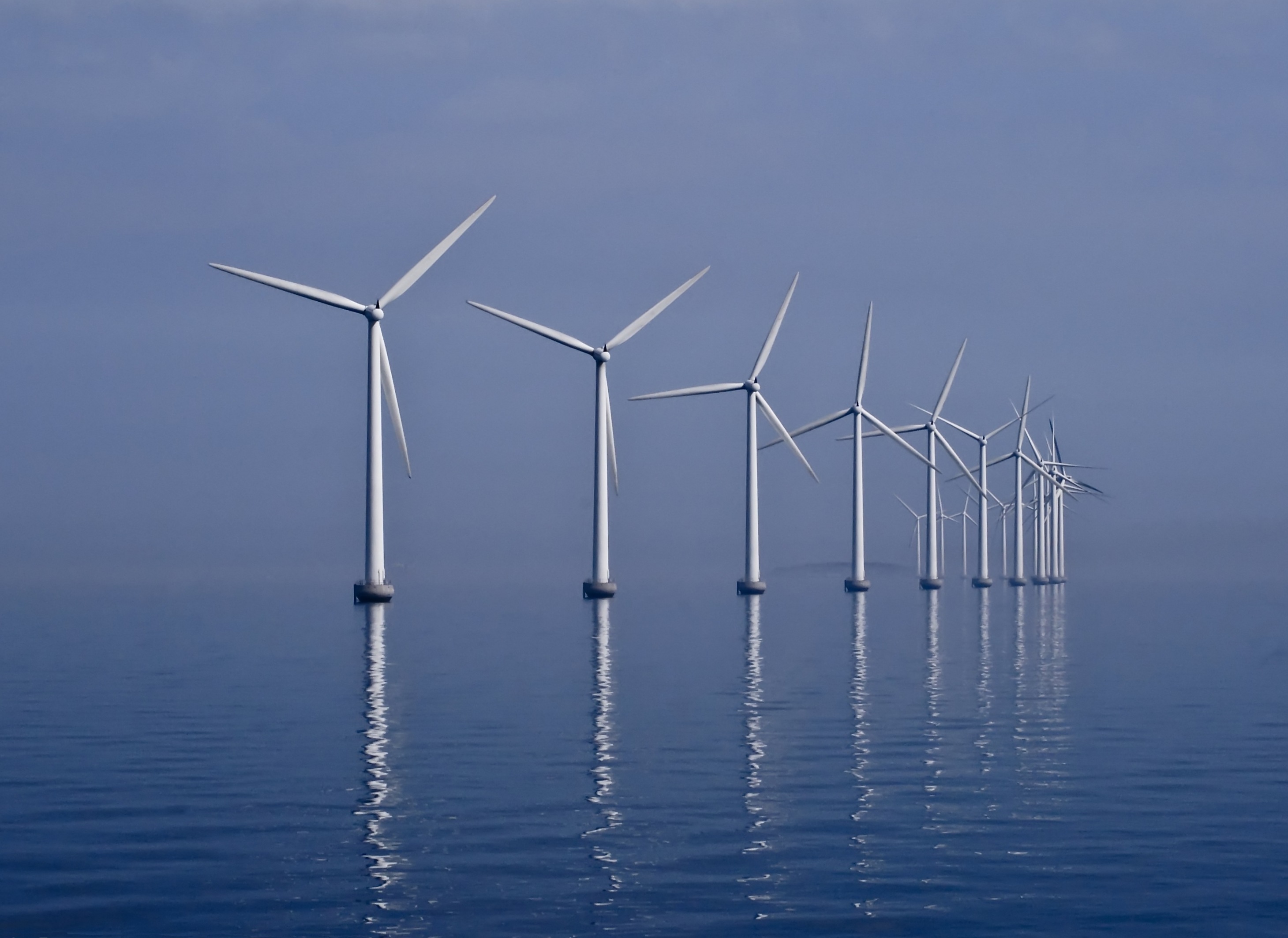

The primary consumption of energy in the brewing process is the heating of water which normally will be done by using electricity. Therefore by switching our electricity source to wind mills we have reduced the total CO2 emissions pr. cup of coffee by almost 40%!
Tuesday, October 8, 2013
Dairy Farm Visit to Øllingegaard
For the past few years we've been using milk from a dairy called Øllingegaard just 40 km out of Copenhagen. We've been doing blind tastings of different milk for the past 12 years in Denmark now, tasting the milk both cold, warm and in cappuccinos, and Øllingegaard won our last tasting. On top of that it's now the only dairy farm on Sjælland and the nearest to Copenhagen which means much shorter transportation than from Jutland.
Vis stort kort
We use quite a lot of milk in our coffee shops and we love a good cappuccino. Now we thought it was time to go visit our milk supplier and learn more about what they do. So eight of us got in a rental and drove up to visit them.
Øllingegaard is a small dairy owner by Solhvervfonden - a foundation committed to spread organic practices for the past 20 years. It's a for-profit foundation that use the money gathered for projects in third world countries. The dairy is situated in beautiful, old, yellow farm buildings from 1925 and have been a dairy since 1995. Of course 100% organic.
As a side note, there used to be one other privately owned dairy in Sjælland called Osted Mejeri. Unfortunately they went bankrupt this summer. A great loss for the milk diversity in Denmark which is dominated by milk giant Arla. Now there's pretty much only Øllingegaard, Naturmælk and Thise left.

Dairy supervisor Michael Christensen took us around the dairy production.
The milk is delivered from 11 farms on Sjælland within hours of milking. It used to be just 8 farms delivering milk, but since the closure of Osted three of the farms that used to deliver there have signed on to Øllingegaard. Which is good, as they really needed more milk.

The farmers milk the cows twice a day, early in the morning around 5 and in the afternoon around 3 o'clock. The milk is tested for bacteria and antibiotics upon arrival at the dairy. It gets filtered at the farm and again at the dairy, but in general Øllingegaard is careful about not moving or pumping the milk around excessively. Too much movement and disturbance of the milk damages the taste. Where other large dairy's move their milk several kilometres through pipes the milk at Øllingegaard doesn't travel more than a few metres. The milk is also not homogenised for the same reason, which means the fat particles collect at the top of the milk - sometimes a bit of a problem for us though.

Beside fresh milk Øllingegaard does amazing butter, which have won numerous awards. It's the one we use at Godthåbsvej too. Talking to Michael about butter really reminded us about ourselves - complete geeks in a certain field. Yoghurt was another topic, and it amazing to see how much knowledge and work is behind these products. Øllingegaard churns their butter in the old-fashioned way on a huge machine and packs it while it's the consistency of mayonnaise. All products go out to stores immediately and Øllingegaard have been a leader in terms of milk freshness. Any products that are in excess is donated to the homeless shelters in Copenhagen.

We also went to visit one of the farms that deliver the milk. Hans Peter Kamp and his wife welcomed us to their beautiful farm with a view over Isefjorden. Here they have 75 hectares of land with 100 milk cows of the Jersey breed. They bought the farm together with another family around 20 years ago, when it was in a very poor state. It hadn't been used for years and the buildings were almost falling together. They've renovated it a lot since and build a new stable for the cows.

Clearly they work hard, from early morning till late evening. But as they said, it's more a way of life and there's plenty of short cuts you could take - that's just not what they wanted to do. They've chosen to be organic and not expand with too many cows, so they can keep everything running in the right way. They are self-supplying with corn and fodder/feed for the cows. It requires 500 tonnes of hay each year for the cows, so there's lots of work to do in the summer time to prepare for winter.

We got to taste the raw milk from the same morning. Completely yellow and rich, with a fat content up around 6,1% (Jersey cows produce more fat and protein than the regular Danish Black & White Milk Cow breed). It tasted really fresh and aromatic and wasn't just heavy and fat. You could clearly sense the brighter herbal and floral aromas in the milk, which probably stems from the grass, weed and herb feed that the cows munch on all summer. They are still outside this time of year and aren't brought in until it starts to rain heavily. You'd think that was how all farms are, but fact is only a fourth of all milk cows in Denmark are ever on grass! An astonishing fact, but it's only a requirement within the organic certification that the cows are brought to pasture for 6 months. Most (3/4) of all conventional milk cows never see grass, but are kept in stables throughout the year.
All in all it was great to see where our milk come from and meet some of the people - and cows - behind it. We're very proud to be working with like-minded people on this other important product in our shops, and already look forward to visiting them again.

You can see all pictures from our field trip here
Tuesday, September 17, 2013
The new crop Yukro is on the shelves
In our busy busy work week we've neglected to inform you all that we now have the fresh crop of Yukro on the shelves. We had hoped to receive the Yukro earlier, but it got delayed at the dry mill for quite some time. Partly because we had some special wishes for the separation and sorting. But we're happy to have the fresh lot available.
This would also be a good time to read up on our visit to Yukro at the beginning of the harvest. Check out our travel report here.
The fresh lot is really aromatic, reminding of citrus-infused teas, peach, apples and lavender. We've roasted it very light and really pushed those aromatics.
Besides 250 g whole beans to bring home Yukro is available per cup brewed on Aeropress at Jægersborggade and Godthåbsvej and Kalita Wave at Torvehallerne. You can also purchase it through our webshop.


Tuesday, August 27, 2013
Torvehallerne Anniversary Sunday 1st September
This Sunday the marketplace Torvehallerne will celebrate 2 years.
We have prepared a special table for all of you who wants to learn more about how to brew your own coffee at home. We will have the most common brewing equipment at your disposal and will brew the coffee together with you.
You will do the work and we will help and answer any questions you might have.
The table will be placed outdoors just in front of our coffee bar in Torvehallerne between 11hs-16hs.
There will be many other things going on as well and we expect a lot of people to feast in these culinary temples.
See you on Sunday !

Tuesday, August 20, 2013
Ben Kaminsky Advanced Brewing Workshop
On September 2nd we're proud to host Ben Kaminsky's Advanced Brewing Techniques workshop at our roastery on Godthåbsvej. If you're a professional barista this is one to attend!
You can purchase tickets for the event here: http://coffeebrews.eventbrite.com/
Ben will be presenting some of his research and new insights on coffee and espresso brewing, grinding, and roasting, that are sure to answer some long standing questions and likely raise many more (e.g. Is espresso brewing inherently flawed? What actually constitutes an espresso roast?).
He will be focusing heavily on techniques surrounding the EK43 grinder, including how to produce a "coffee shot", a new way for brewing filter coffee that he thinks will likely replace the industry's best and fastest brewers to date. This course covers practical ways to improve quality while decreasing costs, as well as new possibilities for coffee and espresso service.
Half the course will be spent in practical tasting of the theory covered in the lecture.
Ben recommends you understand the basic elements of extraction, including practical use of an Extract Mojo if you want to get the most out of the class, though beginners are also welcomed.
September 2nd 2013. 15:00-18:00 (approx). Lecture and tasting.
Sign up on http://coffeebrews.eventbrite.com/
————
Ben Kaminsky is the 2009, 2010, and 2011 United States Cup Tasters Champion, a founding member and partner in Barismo Coffee in the states, and former director of quality control, espresso and innovation at Ritual Coffee Roasters in San Francisco. Since leaving Ritual eight months ago, he has been consulting full time on equipment design, training, roasting and sourcing. He also coached Matt Perger using many of the techniques covered in this class to a second place finish at this year's World Barista Championships.
Monday, July 8, 2013
Food and coffee at Godthåbsvej
One of the most important and basic elements of our coffee shops is that the coffee is the focal point. We don't serve avocado sandwiches, hot chilli for cold winter days or even little squares of chocolate on the saucer only croissants in the morning and small, delicate pastries like a granola bar - nothing that has enough potency to take the focus away from the the cup. We want to share unique coffee experiences without too many distractions.
A lot of good restaurants have begun to work on their coffee profile to make it as much a part of the experience as the food and wine. This is a great development that gives us, as a specialty coffee community, a much broader audience to share great coffee experiences with. It also brings coffee into the light, makes it more than just that black stuff we drink when cake is on the table, which gave rise to the idea we are now testing at our coffee shop on Godthåbsvej. We wanted to look into serving more food with the coffees without turning into a cafe.
The idea was to keep it as simple as possible. Three small dishes, each paired with a specific coffee as a combined experience. The dishes change along with our coffee menu, so new flavour combinations can be tested.

Every dish consists of a couple of slices of sour doe bread and some butter served with different jams and purées consisting of a single ingredient pressure cooked with just a little bit of sugar, to preserve it, and maybe a small squeeze of lemon. This is topped with some kind of ingredient, could be a type of nut, to give it some texture and flavour balance. Other sides could be different cured meats or cheese all depending on which coffee we want pair it with.
This is the menu as it looks at the moment:

Very simple and small. It's not a full meal, more a supplement to highlight the flavours in the cup - nothing more, nothing less.
If you'd like to read more (in Danish) the news paper Politiken did a great article on food and coffee recently: http://politiken.dk/ibyen/nyheder/cafeer/ECE2002967/tendens-nu-skal-vi-have-mad-til-kaffen/

Friday, June 28, 2013
Guatemala 2013 pt 2 - Finca Vista Hermosa
Today we're launching the fresh crop Guatemalan coffees from
Finca Vista Hermosa and El Diamante. Both will be available in our webshop
and our coffee shops. In March our director Peter Dupont and bar
manager and 2013 Danish Barista Champion Rasmus Gamrath visited the
farms in the region of Huehuetanango. Here are their reports from the
trip in two parts. Click here for part one.
In March, I (Rasmus Gamrath) was lucky to get to go to Origin for the
first time. Its something I've been dreaming about doing for a long
time. I have been excited to get to smell, touch and see everything that
goes on at the farm. Getting to go to Huehuetenango was just an extra
bonus since we are buying from two different farms in the area. Peter
has written about our visit to El Diamante, so I will focus on our visit
to Finca Vista Hermosa.
The first thing that stroke me on the
drive up to Finca Vista Hermosa was all the people in the area, that are
involved in producing coffee. It really confirmed the amount of labour
going into producing coffee. It’s something we are all aware of in our
daily work in the bar, but it somehow still managed to surprise me. And
it really showed me how much respect we should have for the effort
people working at the farms put into producing quality coffee.
Drying coffee at FVH
We
were staying at the farm for two days, so we got to experience first
hand what goes on at farm. Peter had arranged for us to come with Diego
one of the farm workers and try to pick berries for a few hours. It was
interesting to see how difficult it actually is to only pick the fully
ripe cherries, and how long time it takes. Due to the slow progress we
didn’t get to pick a lot, but at least the other pickers got some good
laughs looking at our rookie picking style.
Later in the day we
cupped 9 different lots from this years harvest at Finca Vista Hermosa.
It was a good experience to get to cup together with Edwin and Eliseo
(the farm manager at Finca Vista Hermosa) and hear their descriptions of
their coffee.
The next day Edwin showed us around on Finca
Vista Hermosa. We talked about the Roya (leaf rust) that is so
challenging for a lot of farmers at the moment. Luckily it’s not
something they have had problems with at Finca Vista Hermosa. We also
had a look at the nursery were they grow plants to plant on new lots.
They normally grow all new plants themselves, unless they need new
varieties. The way they reproduce plants is by taking a coffee bean
still in its mucilage and leaving it in a sand-like soil. At a point the
bean will sprout and is then put in a plastic back with earth and is
watered intensely. After about two years the plant is ready to be
planted outside the nursery.
Nursery at FVH
When walking around on the farm
Edwin told us about different projects they are doing. They are looking
at different drying methods, at the moment they are drying on patios but
for this year they have done some tests on raised beds. They are also
doing tests on different pruning methods. It was all very interesting to
see.
-Rasmus Gamrath


Wednesday, June 26, 2013
FOB Price on Label
We are now launching an idea we have had since we started The Coffee Collective. We feel that its time to make it transparent for the consumers what is actually paid for the green beans.
When we started buying green beans in The Coffee Collective in 2007 we had the same idea, but we understood from some of the producers we were buying from that they would feel a bit uncomfortable if we revealed what we were paying them. Therefore we didn't do it back then.
Now a lot of things has happened since 2007.
Firstly, back then it was in the aftermath of the coffee crisis, when the market price was extremely low in the period from 1999 to 2005. In 2007 prices had increased since 2005. The market price is now falling again to levels that seems unsustainable. At the same time a rust outbreak is creating huge problems in many producing countries (mainly in Latin America) without the market reacting.
Secondly, within the specialty coffee industry other roasters and traders are now revealing their green prices on their websites, so we do not feel that we are breaking a bond of trust between us and the producers.
Thirdly, on the suggestion of one of the producers we work with, we have added to the transparent price how long we have been working together as a way of showing our relationship.
We believe that it is important to be transparent towards the consumers. We know from our dialogue with our costumers regarding Direct Trade that a lot of people actually are interested in knowing that when they pay a high price for a bag of quality coffee the producer who has created the initial potential for this quality is also getting their share.
Therefore we have chosen to add the following info on each of our bags as we get coffees in from now on:
- The FOB price in $/lb
- The percentage this price is above the market price
- For how many years we have visited the producer and/or
- For how many years we have been buying from the producer
In the end we have choosen to put on the price we have paid as a percentage above the market price to have an easier understandable price for people who might not feel entirely comfortable with FOB (Free On Board) prices or the like. For the calculation of this percentage we use the ICO stats for the New York prices of the relevant quality category in the month of our contract (this is not entirely exact base to use as it underestimates the calculated percentage a bit, but we find it to be the most transparent method we could come up with. Since it underestimates the percentage and we also publish the exact price we still believe it is a decent way to present it. We are though open for better suggestions).
To have an exact number as well, we have chosen to put on the FOB price in $/lb to have a price that is easy to compare between markets, countries as well as with Fair Trade.
We of course think that it is very important what the actual producers receive and not just what is paid on the FOB level. It is though very different from place to place, producers to producer and country to country how the "farm gate" - or "producer" - price is structured. In some places the producer will cover all export costs themselves in others their will be several levels taking care of several functions in the beans way from cherry to FOB. Since we believe that it is important to have comparable prices we have chosen to focus for now on the FOB price.
In most of our cases the price paid to the producer will be the FOB price minus 0,6 - 1,0 $/lb.
We still want to work with our Direct Trade model as an accountable way of communicating how we buy our greens and here we will still document to our clients what the actual producer has been paid. And we will still keep the promise that if it states Direct Trade on one of our bags the producer has gotten at least 25% above the Fair Trade price.
As a last thing we feel that its imperative for us to say that we do not believe that we by doing this have found a golden solution on transparency or anything else in regards to coffee ethics. But by putting the price we have paid for our greens on the bags we hope that we can contribute to at least two things:
First is to develop the understanding the consumers have of coffee and how it is traded.
Second is spurring a debate amongst consumers on these issues. We hope by doing this, more and more people will think about coffee prices and start talking about how unsustainable a lot of the market is.
The first bags with this info is actually already out, since we just got new crop home from Kieni, Gichathaini and Esmeralda that was released Friday 14th of June. This Friday two more coffees, Finca Vista Hermosa and El Diamante will also feature the price info.
Guatemala 2013 pt 1 - El Diamante
This Friday we're launching the fresh crop Guatemalan coffees from Finca Vista Hermosa and El Diamante. Both will be available in our webshop and our coffee shops. In March our director Peter Dupont and bar manager and 2013 Danish Barista Champion Rasmus Gamrath visited the farms in the region of Huehuetanango. Here are their reports from the trip in two parts.
The first week of March 2013 I (Peter Dupont) travelled with our good friend and wholesale costumer Martin Herlak from Aroma from the city of Herning as well as Danish barista champion Rasmus Gamrath to Guatemala. We left Denmark early Saturday morning. Arrived in Guatemala City at night and met with Edwin Martinez from Finca Vista Hermosa. With him was Drew from Onyx, Wille from Heart Roasters in Portland, USA and his friend Shelby.
Sunday we drove to Huehuetenango and Monday to El Diamante to visit Patricía Perez who we bought a very speciel Guatemalan coffee from last year.
It was a great pleasure returning to visit her. She’s very hospitable and immediately invited us in for freshly baked bread and their coffee "Essencia". It’s such a nice little mill, patio and house they have. Rather simple but kept very charming and very clean.
Coffee Essencia

Work at the mill and patio at El Diamante

I had a few bags of our roast of El Diamante with me to give Patricía and show how we roast and present her coffee. Our label text is in Danish so I translated it to her. It was great to show her this and tell her that we very much liked her coffee and that we had many costumers who also value it very highly. When I told her that we had no more of her coffee in stock she laughed and said that then we had come to the right place.
The coffee we had last time from El Diamante had a flavour profile and especially an acidity that reminded me a bit of a gentle top Kenyan coffee. When visiting the mill again I was curious to see how much of this flavour might stem from their way of fermenting. So I tried to understand this in to more details. It turned out that they ferment up to 40 hours and after washing they do an overnight soaking around 12 hours (and even longer at sometimes) where the washed parchment is well covered with water. This seems not unlike what they do in Kenya and is at least not very typical for what I have seen in Guatemala.
I wonder about the fermentation processes during this soaking. I guess the temperature will still be around 15-20 C (at El Diamante they have a pond lying few meters above the mill from where they get their water. It is my impression that the water will be sitting here long enough to be at least 15-20 C). At this temperature fermentation will still be going on. The anaerobe environment when the parchment is covered with water also shouldn't stop fermentation. It would be interesting to know more about soaking influence on the flavour profile.
The next day we went to Finca Vista Hermosa. Here Drew was doing a great job on test roasting lots of samples for us to cup. We had the chance Wednesday to cup the samples we brought from El Diamante and to be honest - we where a bit disappointed. The beautiful fruitiness was tipped over towards over-fermentation. This was really sad to cup since we really enjoyed the coffee last year and even more we enjoy working with Patricia.
Drew agreed to do a re-roast of the samples and we cupped it again the day after. Luckily the different roast seemed to have tipped the coffee back on the right track but the experience from the first cupping still stuck a bit with me. Therefore we got more samples sent home and later when we where back in Denmark we roasted these samples again and here we had no trace of over-fermentation. The new crop El Diamante was again a beautiful fruity cup but entirely on the clean side.
I must admit that I havn't been fully aware of how much the roast can do in tipping a fruity coffee like this from one side to another on the border between fruitiness and over-fermentation. It’s of course a bit scary but on the other hand I feel comfortable that we in our production roasts can find the profiles that will bring out the best fruitiness in this coffee without any over-fermented tones.
- Peter Dupont
You can see all our pictures from the trip in this Flickr set.


Tuesday, June 25, 2013
Black Coffee Brew Down Recap
Just a quick update here from us on the Black Coffee Brew Down we hosted last Friday.
First off, GREAT coverage by Danish newspaper Politiken on the event:
Politiken's iByen had been to the last Brew Down and really captured the feel of the event and why we (baristas) feel it's important.
"When you drink coffee black, you have it in its purest form. And if it has been treated carefully on it's journey from soil to table, you can have a nuanced and aromatic taste experience" [my poor translation] says Omar Maagaard in the article.

With these Brew Downs we hope to achieve the same feeling and excitement as we've experienced with the Latte Art Throwdowns. Admittedly, this is a slower pace, less entertaining to watch and quite possibly more geeky. But we're happy to see so many other shops turn up to these events. I'm sure it's not long before other will start hosting them too.
The winner of the evening (who took home the pot and a Kalita Wave Glass Brewer) was Mr Nobuaki Matsui from Democratic Coffee. Big congratulations to him and a huge thank you to everyone who participated for a fun evening!

Go to Flickr to see a few more pictures
Tuesday, June 18, 2013
Black Coffee Brew Down
This Friday we're hosting the ultimate black coffee brew down at Godthåbsvej!
Aeropress, Kalita Wava, Hario V60, French Press, Espro Press, Siphon, Woodneck, whatever black coffee brewer you want - you choose and compete with the best you got.
The event is free and open to anyone. We start at 19.00 and the competition itself at 20.00. Come early to have more practice time.
The rules: Choose your own brewer and rock it with the mystery coffee provided. One coffee - any brew method. 4 minute competition time and then hands off! 2 baristas up against each other at a time. 3 judges will choose their favourite. Entry fee: kr 20,- Winner takes the pot - And also get to bring home a brand new Kalita Wave Glass Brewer!
We'll have our Uber Boiler and hot water tower ready, as well as scales, timers, grinders and loads of brewing equipment. You're of course also welcome to bring your own.
Come brew some black deliciousness or cheer for your local baristas!

Subscribe to:
Posts (Atom)