
Daterra 2010 visit part 2
See part 1 here
Daterra grows several varieties – or cultivars to be accurate: Mundo Novo, Bourbon, Catuaí, Icatú and Acaiá, and several of these in both red and yellow varieties. Besides those there’s also some experimental cultivars, amongst those the Aramosa, which is a low-caffeine crossing of the species Arabica and Racemosa that Daterra was part of developing.
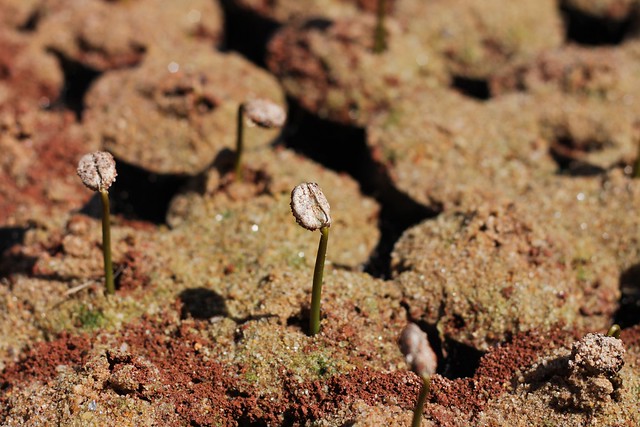
The farm have its own nursery for planting and attending new coffee trees. The sprouting is called “Little Soldiers” from the look of the bean shooting out of the ground.
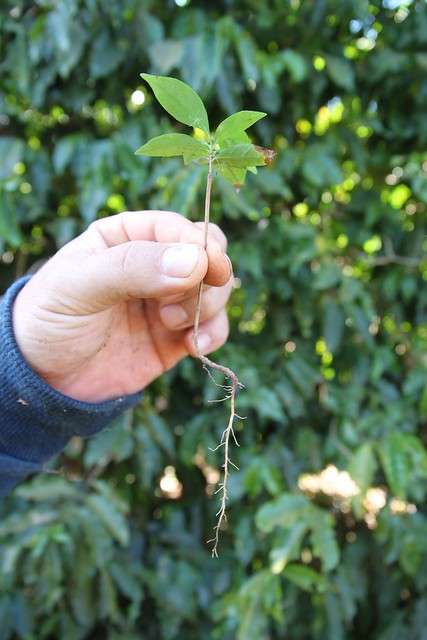
Gustavo showed me how extremely important it is that the root system grows straight down from the very beginning. Otherwise the roots won't bring the nutrients efficiently to the rest of the tree. The tree will then perform badly and eventually it might die. Here’s a good example of a very bad root.
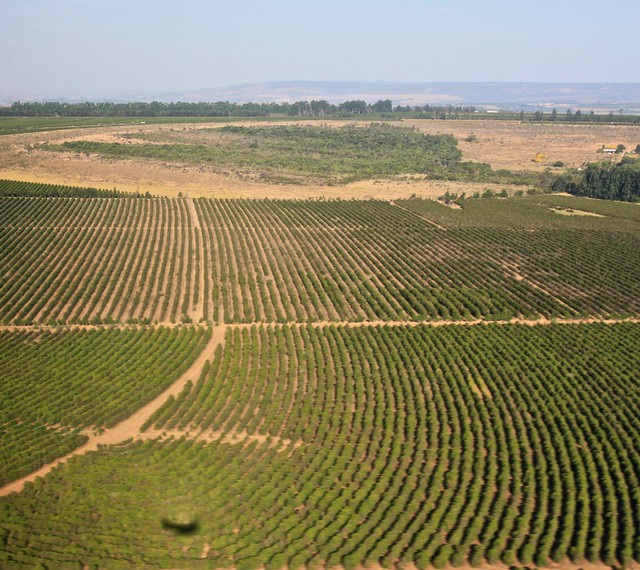
In average Daterra plants 4.000 trees per hectar. Typically for Brazil the trees are planted in very long rows with sections in between for the harvesting machine to dump the cherries in a truck. I took this picture when we flew back from the farm.
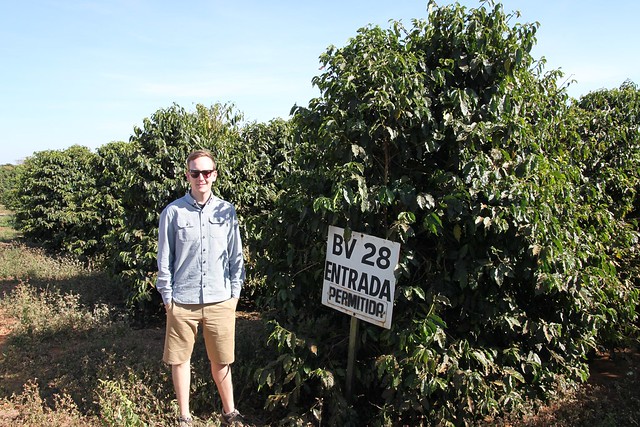
The agronomists on each farm decide when and how to prune the trees; stumping, pruning the sides or simply the top. You loose two to three year’s harvest when you prune, so it’s a careful consideration. I visited a lot where the coffee trees have been allowed to grow wild since 1973 and the trees were now around 4 metres high. Potentially they could grow higher but these ones had started to slant to the sides and in stead increased in the size of the trunk. It was quite fun to see the the size of the trees though and to see the many young coffee trees growing wild underneath from the cherries that had fallen to the ground.
I also visited the lot where we’ll be getting this years Sweet Collection from; Boa Vista 22:
This year the harvesting began quite early due to a very strange flowering last year.
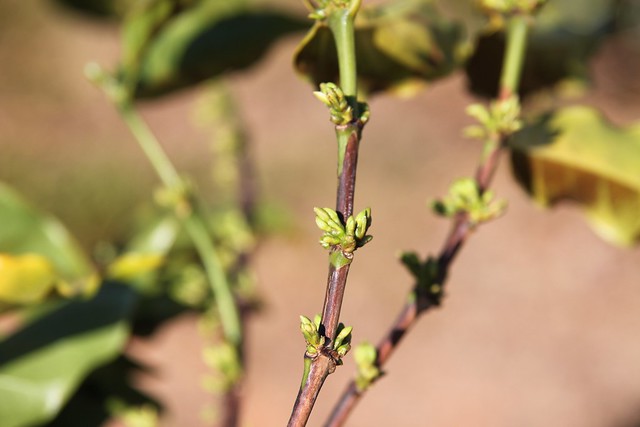
A coffee tree in most areas flower once a year following (heavy) rain fall. The green coffee then ripens for somewhere between 8 to 10 months.
Just a drop of rain and this tree will flower:
Green, unripe cherries:
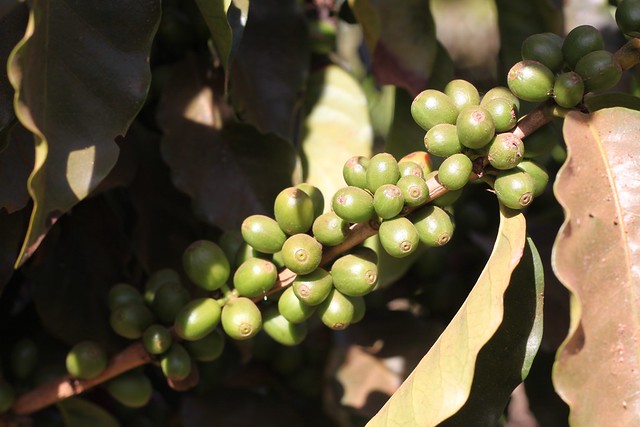
Around week 30 after the flowering season (meaning flowering is week 0) Daterra collects samples from all the different fields/lots that are then processed, dried, hand sorted, roasted and finally cupped by Carlinhos. From that cupping they decide when the harvesting of each lots should begin. I’ve never before encountered a farm who had this approach to determining the harvest time. It’s very impressive! Most farms will go by the color of the cherries, when deciding when to harvest. I’ve also seen others measure the sugar content and Daterra has also tested this is in the past, but decided not to rely on it. It simply didn’t give results that matched when it was best to harvest from a taste-point-of-view.
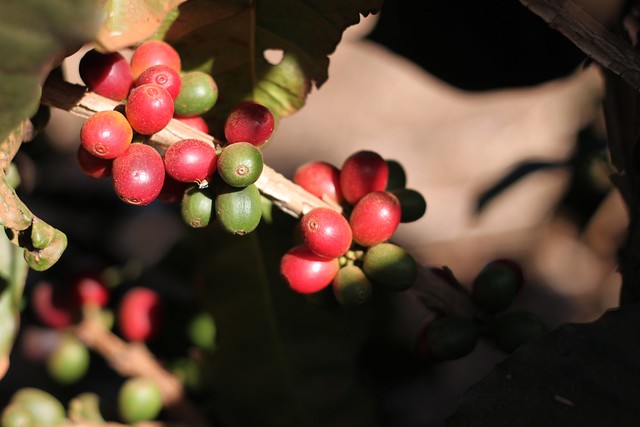
Usually the harvest than begins around week 40 after flowering, but this year they had to start already week 31 – just a week after cupping the lots. As I mentioned earlier the flowering this year in Brazil was sort of strange, resulting in very different ripening stages on the same branch.
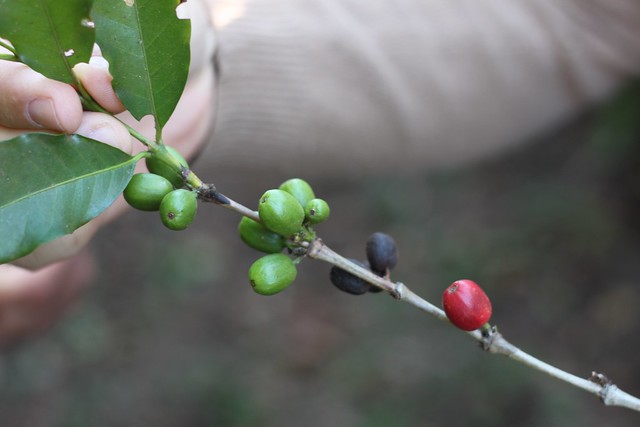
Harvesting in Brazil is done in most places with machines. The few who do hand picking, usually don’t do selective hand picking of only ripe cherry, but in stead stripping – which is removing everything from the branch. The machines Daterra uses are quite different than the other machines I’ve seen in Brazil. They look the same but functions differently.
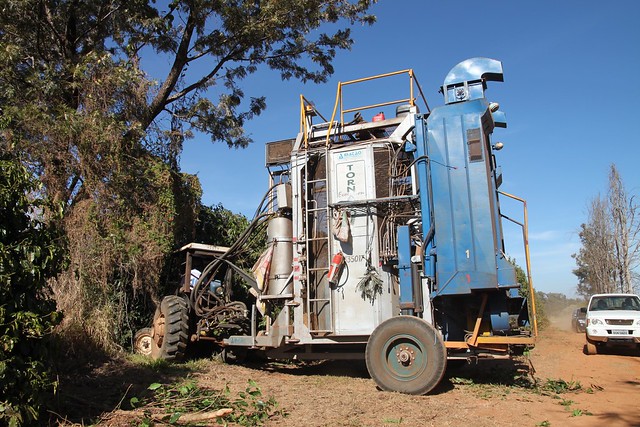
The whole machine drives over a row of coffee trees, 2,5-3 metres height I’d guess. Inside there’s many small sticks made out of a bendy material. The sticks vibrate gently and shake off the cherries from the tree. In the past I’ve seen similar machines, but on those the sticks were rotating and thus stripping all cherrys and lots of leaves off the branches. Naturally it’s a bad idea to remove the leaves as you’ll have less photosynthesis happening. With Daterra’s machine I was impressed to see how few leaves were taken off and that no branches while I observed were damaged. The cherries, just like a ripe apple, will fall of quite easily compared to the unripe. So Daterra can actually harvest the same rows 2 or 3 times.
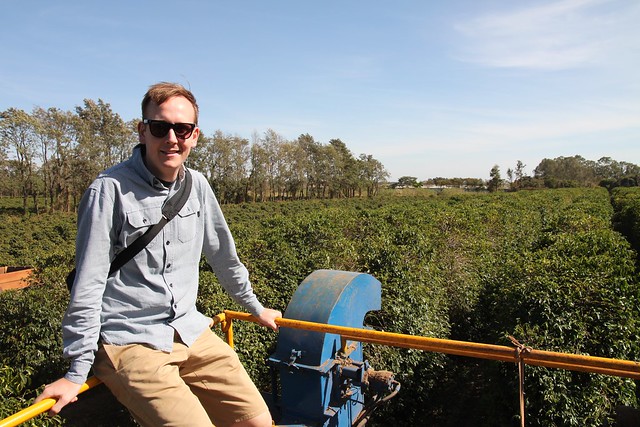
I came at the very end of the harvest season, though, so most of what was left were the Raisins – the over-ripe cherries that become natural processed coffee.
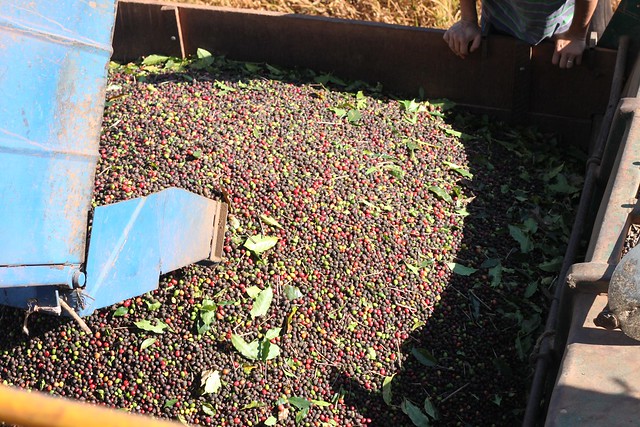
Straight after harvesting the coffee will go to the Wet Mill for processing.
Wednesday, August 18, 2010
Daterra 2010 visit part 2

Tuesday, August 17, 2010
Daterra 2010 visit part 1
When we originally started planning The Coffee Collective, Daterra was the first farm we knew we’d buy from. Back in 2005 when Peter and I was training for the barista championship and developing the blend I was going to use, we visited Daterra and had a true Eureka! moment when we cupped the Daterrra Sweet Collection. It was extremely sweet and clean with a mouthfeel that felt perfect for espresso.
So I was very excited to visit Daterra again this year for the first time since then.
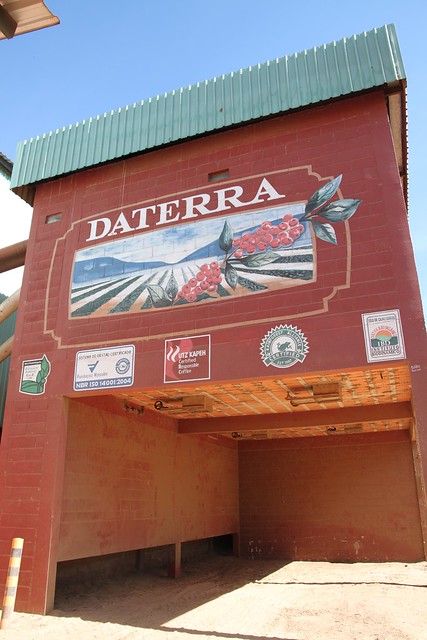
Daterra is located in the Cerrado region. A region you’ll have a hard time finding on a map, since it’s not a political but an ecological region. It’s a very dry area with lots of small Savannah-like vegetation. The farm itself is located around 1100-1200 meters above sea level and measures a whooping 6.000 hectars of land – half of that, though, is actually reservation area, where no coffee is grown. To say Daterra is one farm, is technically incorrect as it is actually made up of three farms: Boa Vista, where the office, the Dry Mill and Quality Control Center is located, Tabuões neighbouring Boa Vista, and finally São João, which is pretty far away in the Sao Paulo state.
There’s about 300 people employed full time year round at Daterra and an additional 150 during the harvest season. I didn’t get to meet them all. But I did get to see Luis Pascoal, the owner and visionary behind Daterra. Luis is an amazing guy whose commitment to sustainable practices and innovation is unsurpassed. He bought the farm 18 years ago and within a decade it was already renowned throughout the specialty coffee world – not the least for it’s research, much of it done together with Illy in Trieste, Italy, specifically on growing and processing coffee for espresso. They were the first farm in the world to vacuum pack coffees in stead of packing in jute sack. Their dry mill have machines that are state-of-the-art and some which Daterra even invented themselves. And to hear Luis speak about politics and environmental challenges almost makes me wish he was a political leader – but then again I’m sure he’s doing plenty good where he is now. Besides the farm Luis is the C.E.O. of Dpaschoal – the largest tire supplier in Brazil. And even in that business he’s committed to environmentally sustainable practices and is right now re-schooling all of his 4.000 employees. Besides that he finds time for a charity fond and even design coffee cups for his roastery Ateliê do Café. The man must never sleep.
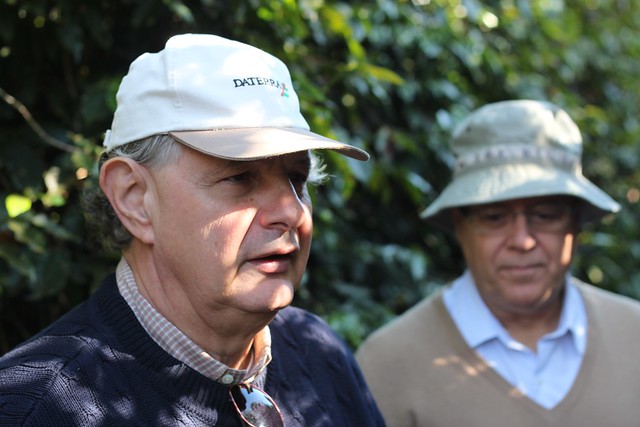
Luis and agronomist/farm manager Leo
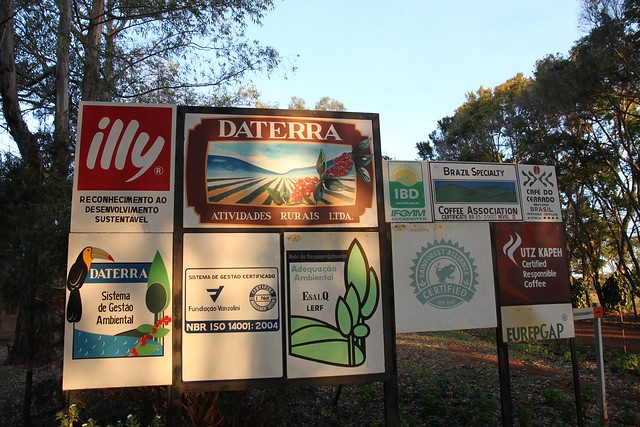
Daterra was the first coffee farm in Brazil to be Rainforest Alliance certified and today have numerous certifications.
The always lovely Andreza showed me around the farm and in general took great care of me. She’s also the one we talk to about all the logistics and purchases of the coffee. During harvest season and until the coffee has been shipped her calendar must be heavily packed. I’m very grateful for her hospitality!
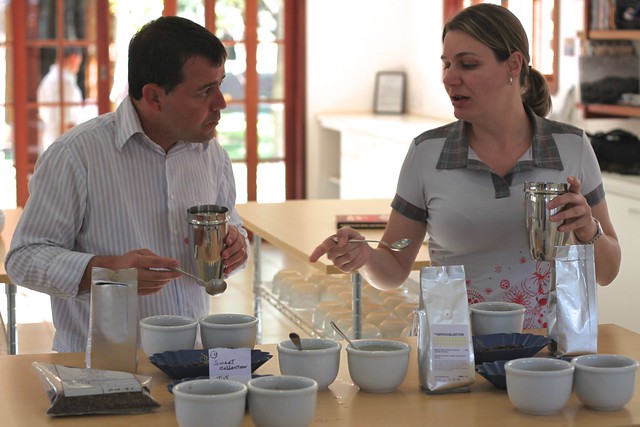
Carlinhos (“Little Carlos”) is the Quality Control chief and cupper at the farm. He roasts and cups every single microlot before, during and after harvest, constantly monitoring the development. And also he’s a very nice guy! I really enjoyed cupping with him.
Carlinhos and Andreza cupping some TCC coffees
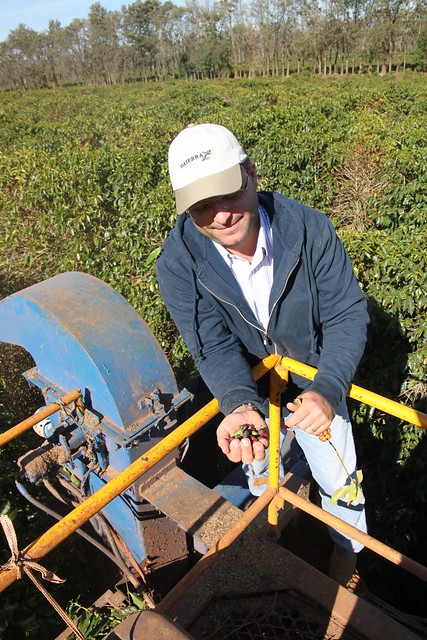
I also met Daterra’s three agonomists. Leopoldo Santana – or just Leo - is really the farm manager and in close cooperation with Carlinhos they’ll determine when to harvest and what to renew on the wet and dry mill. Gustavo is the agronomist responsible for the Boa Vista farm and one of the most knowledgeable and informative guys I’ve ever met. Talking to him about growing, nursing, pruning, maintaining and protecting coffee trees taught me more than any book I’ve read on the subject(s). Sidney was also kind enough to show me around the Tabuões farm and especially the very large wet mill they have there.
Gustavo showing a handful of the late harvest
I’m going to divide the account of this trip into three post of which this was the first. And instead of boring you with every little detail about what I did on my trip, I’m going to structure it around what happens on the farm.
Tuesday, August 3, 2010
Last cupping session with Jordan!

Tuesday, June 29, 2010
TCC at Roskilde Festival
At this years Roskilde Festival - the largest music festival in Northern Europe - visitors will be able to have a delicious cup of TCC coffee. Together with our good friends at Manfred's, who will serve amazing and nutritious food, we'll be opening a coffee shop from Thursday when the music starts till Sunday when it stops.
You can find us at Manfreds in the Nordic area Hal B, booth number 09-09.

The menu will be simple; espresso, cappuccino, caffe latte, iced latte and americano at very reasonable prices too. We've got a great crew of experienced baristas behind the 2-group La Marzocco and Robur E grinder, so the quality should live up to our usual expectations.
Manfred's will be serving their infamous Coarse Pea Soup with cold-pressed rape seed oil, their thick Koldskål (look it up if you're from another country), fresh strawberries from Rokkedyssegård as well as some hearty sandwiches, buns and oat meal. Everything you need to come back to life after the concerts.
See you at Roskilde!